

Planning a corporate event requires creativity, coordination, and careful financial planning. Whether it is a conference, product launch, or annual celebration, corporate event budgeting plays a critical role in ensuring the event runs smoothly without overspending. A well-planned budget helps companies allocate resources efficiently and avoid unexpected costs.
In 2026, businesses are focusing more on structured planning and cost control. With rising venue, production, and catering expenses, companies need clear strategies to manage spending while maintaining event quality. A detailed budget allows teams to prioritize essential elements and make informed decisions throughout the planning process.
India’s corporate event industry offers a strong advantage with organized planning teams and cost-effective vendor networks. Businesses benefit from structured planning and reliable coordination. With the right budgeting approach, companies can host impactful events while maintaining financial control.
With experience in corporate planning and execution, Plan with Yolo supports companies in organizing well-managed events with structured budgeting and efficient cost management.
Table of Contents
Why Corporate Event Budgeting Matters
A clear budget ensures that all event elements are planned within financial limits. Without proper budgeting, costs can quickly increase due to last-minute changes or poor coordination.
Event budget planning for companies helps define spending limits for venues, catering, décor, and technical setup. It also ensures that resources are allocated effectively based on priorities.
Budgeting improves transparency and accountability. Teams can track expenses and adjust plans if costs exceed expectations. This helps avoid overspending and ensures better financial control.
Corporate Event Cost Breakdown
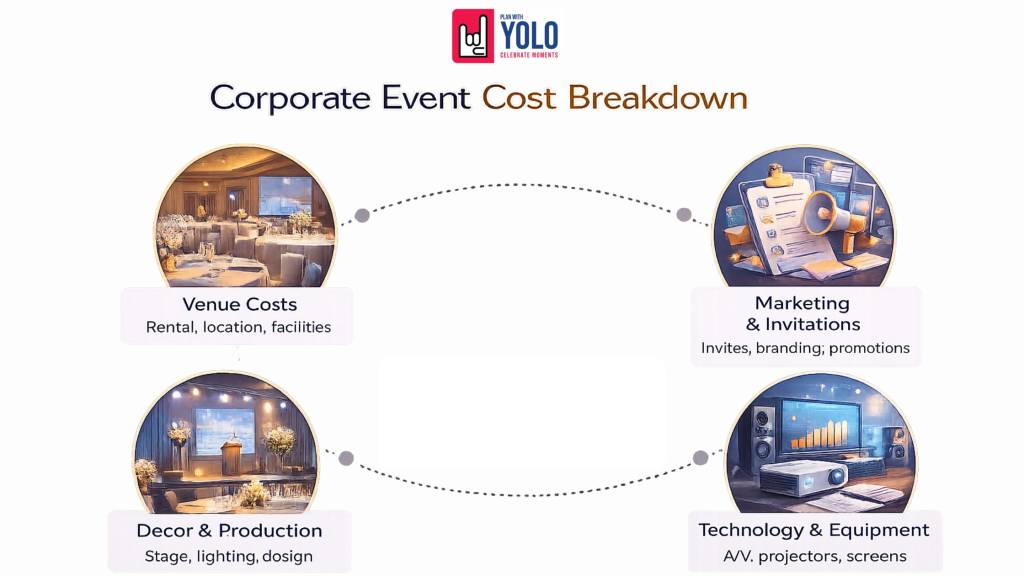
Understanding a corporate event cost breakdown helps businesses plan more effectively and avoid unexpected expenses. Event costs can vary depending on the event type, number of attendees, venue location, and level of production required. Creating a detailed breakdown allows companies to allocate funds properly, prioritize important elements, and maintain financial control throughout the planning process.
Venue Costs
Venue rental is usually one of the largest expenses in corporate event budgeting. Costs depend on factors such as location, capacity, duration, and included facilities. Premium venues in central business districts or luxury hotels may have higher rental charges, while smaller venues or weekday bookings may offer cost savings. Additional charges for seating arrangements, security, parking, and setup time should also be considered. Early booking often helps secure better rates and availability.
Catering
Catering is another major component of the event budget. Costs are influenced by the number of guests, type of cuisine, service style, and menu customization. Buffet services may be more cost-effective than plated meals, while live counters and specialty menus can increase expenses. Beverage services, desserts, and service staff charges also add to the total catering cost. Planning the menu carefully ensures quality while staying within budget.
Décor and Production
Décor and production elements contribute significantly to the overall event experience. This includes stage setup, lighting, floral arrangements, backdrops, and branding elements. The complexity of design and customization affects pricing. For example, themed décor, LED installations, and custom stage designs may require higher investment. Balancing visual appeal with budget constraints is important to maintain both quality and cost efficiency.
Technology and Equipment
Modern corporate events often require audio-visual equipment, microphones, LED screens, projectors, and live streaming setups. These technical elements ensure smooth presentations and enhance audience engagement. Costs depend on the scale of production, duration of use, and technical support required. Hiring experienced technicians and testing equipment in advance helps avoid last-minute issues and additional expenses.
Marketing and Invitations
Promotional materials and invitations also form part of the event budget. Digital invitations, branded banners, registration systems, and promotional activities contribute to overall costs. Companies may also invest in social media promotions, event branding, and guest kits. Choosing digital communication methods can reduce printing and distribution expenses while maintaining a professional look.
A well-structured cost breakdown helps companies track spending and make informed decisions. With clear planning and regular expense monitoring, businesses can ensure that their corporate events remain within budget while still delivering a professional and engaging experience.
Corporate Event Budget Template
Using a corporate event budget template helps track expenses and manage spending effectively. A template typically includes categories such as venue, catering, décor, and logistics.
Start by defining total available budget. Then allocate funds to each category based on priority. Tracking expenses in real time helps maintain control and avoid overspending.
Templates also improve communication between teams and vendors. Everyone involved can review costs and ensure alignment with the budget.
How to Reduce Corporate Event Costs
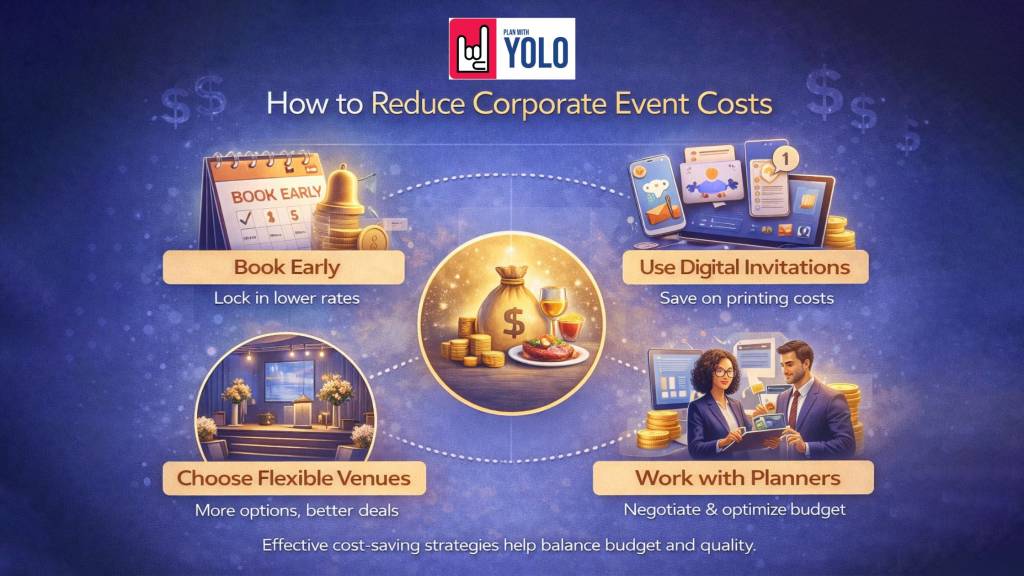
Many companies look for ways to control spending without compromising quality. Learning how to reduce corporate event costs helps maintain balance between budget and experience.
Booking venues early often reduces costs and ensures better availability. Choosing flexible dates can also help secure better pricing.
Using digital invitations instead of printed materials reduces expenses. Opting for minimal yet impactful décor helps control spending while maintaining a professional look.
Working with experienced planners helps identify cost-saving opportunities. They know how to allocate resources effectively and negotiate with vendors.
Corporate Event Expense Management
Effective corporate event expense management ensures that spending remains within budget. Regular tracking of expenses helps teams identify overspending early.
Using budgeting tools or spreadsheets improves organization. This helps track vendor payments, deposits, and final expenses.
Clear communication with vendors and planners ensures transparency. This helps avoid hidden costs and unexpected charges.
Businesses looking for structured planning and reliable cost management can explore professional corporate event support with Plan with Yolo, a team experienced in coordinating budgets, vendors, and execution for business events. Their organized approach helps companies manage expenses effectively while maintaining event quality. Working with experienced teams like Plan with Yolo ensures budgets are handled efficiently and events run smoothly from planning to completion.
Money-Saving Strategies for Corporate Events
Planning early is one of the most effective ways to save money. Early bookings often come with better rates and more options.
Choosing multi-purpose venues can reduce setup and logistics costs. Hosting events during off-peak seasons also helps control expenses.
Combining virtual and in-person elements can reduce venue and travel costs. This approach is becoming popular for corporate events.
Reusing décor and digital materials helps maintain consistency while reducing spending. Careful planning ensures cost efficiency without affecting quality.
Reliable teams like Plan with Yolo focus on structured budgeting and efficient coordination, helping companies host well-managed events within their financial limits.
Comparison: In-House Budgeting vs Professional Planning
| Aspect | In-House Planning | Professional Planning |
|---|---|---|
| Budget Control | Limited experience | Structured planning |
| Vendor Negotiation | Basic | Strong vendor network |
| Cost Efficiency | Variable | Optimized spending |
| Time Management | Time-consuming | Efficient coordination |
| Overall Result | Risk of overspending | Balanced budget |
This comparison highlights the importance of professional planning for better cost management.
Conclusion
Effective corporate event budgeting ensures that events are well-organized and financially controlled. From cost breakdowns to templates and savings strategies, structured planning helps businesses achieve their event goals without overspending.
As corporate events continue to evolve in 2026, companies that prioritize budgeting and planning gain a significant advantage. Clear financial strategies improve efficiency and ensure successful event execution.
With a focus on structured planning and cost management, Plan with Yolo supports businesses in organizing corporate events that are engaging, well-coordinated, and aligned with their budgets.
FAQ
1. What is corporate event budgeting?
Corporate event budgeting involves planning and allocating funds for venues, catering, décor, logistics, and other expenses. It helps companies control costs and avoid overspending.
2. What does a corporate event cost breakdown include?
A cost breakdown usually covers venue rental, catering, production, décor, technology, and marketing. This structure helps track expenses more clearly.
3. How can companies reduce corporate event costs?
Companies can reduce costs by booking early, using digital invitations, choosing flexible venues, and prioritizing essential event elements.
4. Why is event budget planning important for companies?
Event budget planning ensures better financial control, transparency, and smoother coordination. It helps teams make informed decisions throughout the planning process.
5. Who can help with corporate event budgeting and expense management?
Experienced planners like Plan with Yolo assist companies with structured budgeting, cost optimization, and smooth execution to ensure events stay within budget while maintaining quality.